



NO Synthase
Nitric oxide synthases; NOS
Nitric oxide synthases (NOSs) are a family of enzymes catalyzing the production of nitric oxide (NO) from L-arginine. NO synthases catalyze the oxidation of L-arginine to NO and L-citrulline. Mammals contain three NOS isoforms: neuronal NOS (nNOS), inducible NOS (iNOS), and endothelial NOS (eNOS). NO produced from these different NOS isoforms is involved in a wide range of physiologic functions in the nervous, immune, and cardiovascular systems. Unregulated NO production can lead to pathologic conditions such as stroke, inflammation, and hypertension. Therefore, the control of NOS activity by isoform selective NOS inhibitors has great potential for therapeutic treatments of NO-related diseases.
NO Synthase Isoform Specific Products
All Product Categories
-
NO Synthase Inhibitors
(755)
View all products
-
NO Synthase Agonists
(5)
View all products
-
NO Synthase Antagonists
(4)
View all products
-
NO Synthase Activators
(111)
View all products
-
NO Synthase Modulators
(14)
View all products
-
NO Synthase MDM2 Inhibitor
(1)
View all products
-
NO Synthase Inducers
(7)
View all products
-
NO Synthase Controls
(6)
View all products
-
NO Synthase Substrates
(2)
View all products
-
NO Synthase Ligand
(1)
View all products
-
NO Synthase Related Products (1009)
Related Products (1009)

-
Antibodies (6)
-
NO Synthase Isoform Comparison
-
Pulegone (Standard)
 0 ImagesPulegone (Standard) is the analytical standard of Pulegone (HY-N1500). This product is intended for research and analytical applications. Pulegone is a monoterpene ketone compound widely present in the essential oils of many plants. Pulegone can also be used as a bird repellent. Pulegone has multiple activities such as anti-inflammatory, antibacterial, antifungal, and anti-hyperalgesic effects. Pulegone is particularly effective against bacteria of the Salmonella species.
-
meso-Zeaxanthin
 0 ImagesCat. No.: HY-167632CAS No.: 31272-50-1Synonyms: (3R,3′S)-Zeaxanthinmeso-Zeaxanthin ((3R,3′S)-Zeaxanthin) is an orally active xanthophyll carotenoid. meso-Zeaxanthin inhibits CYP1A1, CYP1A2, CYP2B1/2, COX-2, TNF-α and iNOS, and enhances the activities of Uridine diphosphate glucuronosyltransferase and Glutathione-S-transferase. meso-Zeaxanthin quenches oxygen free radicals. meso-Zeaxanthin filters short-wavelength blue light, alleviates oxidative damage and visual abnormalities. meso-Zeaxanthin reduces tumor incidence, prolongs tumor latency and survival rate of tumor-bearing mice, and inhibits paw edema. meso-Zeaxanthin can be used in research related to sarcoma and age-related macular degeneration.
-
4-Methoxybenzyl alcohol (Standard)
 0 ImagesSynonyms: P-Methoxy-benzyl alcoho (Standard); (4-Methoxyphenyl)methanol (Standard)4-Methoxybenzyl alcohol (Standard) (P-Methoxy-benzyl alcoho (Standard); (4-Methoxyphenyl)methanol (Standard)) is the analytical standard of 4-Methoxybenzyl alcohol (HY-W015777). This product is intended for research and analytical applications. 4-Methoxybenzyl alcohol (P-Methoxy-benzyl alcoho; (4-Methoxyphenyl) methanol) is a naturally derived volatile aromatic compound. 4-Methoxybenzyl alcohol upregulates the phosphorylation level of PI3K/Akt pathway proteins, downregulates the expression of pro-inflammatory factors, increases the content of tight junction proteins occludin and claudin-5, and alleviates structural damage to the blood-brain barrier. 4-Methoxybenzyl alcohol improves the decrease in viability and NO level of cerebral microvascular endothelial cells induced by oxygen-glucose deprivation/reperfusion, and reduces the release of lactate dehydrogenase. 4-Methoxybenzyl alcohol serves as a substrate in the two-phase persulfate-mediated electro-oxidation system, where it is directionally oxidized to p-anisaldehyde. 4-Methoxybenzyl alcohol acts as a substrate for wild-type fungal aryl alcohol oxidase. 4-Methoxybenzyl alcohol can be used in studies related to ischemic stroke, as well as in research across various fields such as chemical synthesis, including the synthesis of fragrances and flavorings.
-
8-Hydroxygenistein
 0 ImagesCat. No.: HY-W753779CAS No.: 13539-27-0Synonyms: 8-OHG8-Hydroxygenistein (8-OHG) is an antioxidant that can effectively scavenge nitric oxide (NO) and superoxide anion (O₂⁻). 8-Hydroxygenistein belongs to ortho-dihydroxy isoflavones (ODI) and is abundantly present in dark soy sauce and light soy sauce. Its antioxidant activity is stronger than that of its parent compound genistein (HY-14596). The content of 8-Hydroxygenistein is positively correlated with the antioxidant capacity of soy sauce (r = 0.959), and it remains highly stable even after being heated in boiling water for 60 minutes. During the brewing and storage of soy sauce, 8-Hydroxygenistein effectively prevents oxidative damage, making it promising for use in food antioxidant research.
-
Ovalichromene B
 0 ImagesCat. No.: HY-N20723CAS No.: 62868-06-8Ovalichromene B is a flavonone and phytochemical with an IC50 of 78.83 ± 1.04 μM, found in the dry stem of Pongamia pinnata (L.) Pierre.Ovalichromene B inhibits lipopolysaccharide-induced nitric oxide production.Ovalichromene B exhibits high intestinal absorption, non-mutagenicity, non-hepatotoxicity, and no predicted hERG I or II channel inhibition.Ovalichromene B can be used for the research of neurodegenerative diseases.Ovalichromene B can be used for the research of carbapenem-resistant enterobacterales infections.
-
Prim-O-glucosylcimifugin (Standard)
 0 ImagesCat. No.: HY-N0635RCAS No.: 80681-45-4Prim-O-glucosylcimifugin (Standard) is the analytical standard of Prim-O-glucosylcimifugin. This product is intended for research and analytical applications. Prim-O-glucosylcimifugin exerts anti-inflammatory effects through the inhibition of iNOS and COX-2 expression by through regulating JAK2/STAT3 signaling.
-
Sodium propionate-13C-1
 0 ImagesCat. No.: HY-B1773AS1CAS No.: 83587-76-2Sodium propionate-13C-1 is the 13C-labeled Propionate sodium (HY-B1773A). Sodium propionate is an orally active short-chain fatty acid. Sodium propionate can be produced by intestinal bacteria from the metabolism of dietary fiber. Sodium propionate increases PPAR-γ, inhibits NF-κB activation, and reduces COX-2 expression and NO production. Sodium propionate also induces Apoptosis and Autophagy. Sodium propionate reduces HSV-1-induced keratitis. Sodium propionate has anticancer effects against glioblastoma. Sodium propionate exhibits neuroprotective, antioxidant, and anti-inflammatory activities. Sodium propionate can be used in the research of spinal cord injury and Alzheimer's disease.
-
D-NAME
 0 ImagesCat. No.: HY-18729BCAS No.: 141968-19-6Synonyms: NG-Nitro-D-arginine methyl esterD-NAME (NG-Nitro-D-arginine methyl ester) is an orally active enantiomer of L-NAME (HY-18729). D-NAME inhibits Nitric oxide synthase activity in myocardium and aorta (Note: D-NAME was once classified as an inactive substance and used as a negative control in nitric oxide synthase inhibition studies), induces increases in systolic blood pressure and mean arterial blood pressure, reduces mesenteric arterial conductance, elevates the ratio of left ventricular weight to body weight, induces myocardial fibrosis, increases the cross-sectional area of aortic wall, enhances mesenteric vasodilation induced by nitrovasodilators, and releases nitric oxide via its guanidino nitro group. D-NAME has no effect on ovalbumin-induced pulmonary eosinophilia in sensitized mice. D-NAME can be used in hypertension-related research.
-
Anhydronotoptol
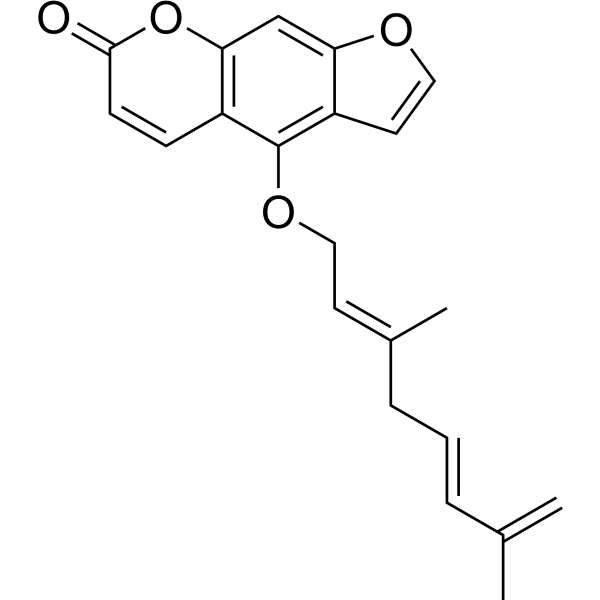 0 ImagesCat. No.: HY-N9896CAS No.: 88206-51-3Anhydronotoptol is a potent nitric oxide inhibitory coumarin. Anhydronotoptol inhibits NO production in RAW 264.7 cells induced by LPS with an IC50 value of 36.6 μM.
-
1-Heptadecanoyl-rac-glycerol
 0 Images1-Heptadecanoyl-rac-glycerol (1-Heptadecanoin) is a glyceride compound with anti-inflammatory activity. 1-Heptadecanoyl-rac-glycerol inhibits the occurrence of inflammation by suppressing the expression of inducible nitric oxide synthase (iNOS) related to inflammation. 1-Heptadecanoyl-rac-glycerol can be used for research on diseases related to inflammation.
-
N-Methylnuciferine iodide
 0 ImagesCat. No.: HY-N3182ACAS No.: 53098-68-3N-Methylnuciferine iodide, an alkaloid from Lotus Plumule, ameliorate lipopolysaccharide-induced depression-like behavior.
-
Isosorbide dinitrate (Standard)
 0 ImagesIsosorbide dinitrate (Standard) is the analytical standard of Isosorbide dinitrate. This product is intended for research and analytical applications. Isosorbide dinitrate (ISDN) is an NO donor that prevents LV remodeling and degradation of cardiac function following myocardial infarction (MI).
-
S-MTC acetate
 0 ImagesCat. No.: HY-U00432BCAS No.: 174063-92-4Synonyms: S-Methyl-L-thiocitrulline acetateS-MTC acetate (S-Methyl-L-thiocitrulline acetate) acts as a powerful inhibitor of inducible nitric oxide synthase, favoring the inhibition of constitutive (neuronal) nitric oxide synthase over inducible (endothelial) nitric oxide synthase.
-
Hydralazine hydrochloride (Standard)
 0 ImagesHydralazine (hydrochloride) (Standard) is the analytical standard of Hydralazine (hydrochloride). This product is intended for research and analytical applications. Hydralazine hydrochloride is an orally active, blood-brain barrier-permeable DNA methyltransferase inhibitor with vasodilatory, arterial smooth muscle relaxant and hypotensive activities. Hydralazine hydrochloride reactivates silenced tumor suppressor genes via mediating DNA demethylation, while exerting neuroprotective and anti-inflammatory properties. Hydralazine hydrochloride inhibits NOS-2 (iNOS) and COX-2, and reduces the production of NO and PGEE2; meanwhile, Hydralazine hydrochloride scavenges reactive oxygen species and inhibits macrophage activation. Hydralazine hydrochloride alleviates motor dysfunction, neuropathic inflammatory pain, and formalin-induced somatic and emotional pain responses. In addition, Hydralazine hydrochloride directly induces DNA strand breaks and sister chromatid exchange, exhibiting certain mutagenic characteristics. Hydralazine hydrochloride has been widely used in studies on hypertension, various cancers (such as cervical cancer, leukemia), spinal cord injury and the mechanisms of inflammatory pain.
-
Schisanchinin D
 0 ImagesCat. No.: HY-N0859BCAS No.: 1614245-13-4Schisanchinin D is an NO release inhibitor found in the fruits of Schisandra chinensis. Schisanchinin D can inhibit the release of nitric oxide (NO) by lipopolysaccharide (LPS)-activated microglia in primary murine BV2 microglia cells. Schisanchinin D is promising for research of neurodegenerative diseases such as Alzheimer's disease (AD).
-
7-Acetoxycoumarin
 0 ImagesCat. No.: HY-N20744CAS No.: 10387-49-2Synonyms: Acetylumbelliferone7-Acetoxycoumarin (Acetylumbelliferone) is an anti-inflammatory inhibitor with antibacterial and amoebicidal activities. 7-Acetoxycoumarin reduces the phosphorylation levels of ERK, JNK, NF-κB and p38 MAPK. 7-Acetoxycoumarin downregulates the protein and mRNA expression levels of iNOS and COX-2. 7-Acetoxycoumarin inhibits the production of IL-1β, IL-6, TNF-α, NO and PG2. 7-Acetoxycoumarin reduces the degradation of IκBα. 7-Acetoxycoumarin can be used in studies related to amoebiasis and Bacillus lentus infection.
-
RA839 (Standard)
 0 ImagesCat. No.: HY-110275RCAS No.: 1832713-02-6RA839 (Standard) is the analytical standard of RA839 (HY-110275). This product is intended for research and analytical applications. RA839 is a selective Nrf2/ARE pathway agonist and non-covalent small molecule binder of Keap1 (Kd is approximately 6 μM). RA839 prevents inducible nitric oxide synthase expression and nitric oxide release. RA839 exerts anti-rotaviral and anti-inflammatory effects.
-
Patrinoside aglucone
 0 ImagesCat. No.: HY-160121CAS No.: 76319-15-8Synonyms: Patrinoside aglyconePatrinoside aglucone (Compound 8) is an iridoid glucoside that can be isolated from the Valeriana tuberosa. Patrinoside aglucone has potent anticancer activity with G2/M phase tumor cell cycle arrest and apoptosis induction. Patrinoside aglucone also significantly inhibits the proliferation of cancer stem cells (such as MDA-MB-231 and U-251MG cells). Patrinoside aglucone has great anti-inflammatory activity by inhibiting NO release (IC50: 43.44 μM) and significantly reduces the level of TNF-α, IL-1β, IL-6, PGE2 and COX-2.
-
BN80933
 0 ImagesCat. No.: HY-183944CAS No.: 214348-10-4BN80933 is a selective neuronal nitric oxide synthase (nNOS) inhibitor with a rat Ki of 0.92 μM. BN80933 inhibits lipid peroxidation, and blocks hypoxia-induced lactate dehydrogenase elevation and delayed 8-epiprostaglandin F2α elevation. BN80933 can be used for the research of stroke, and traumatic brain injury.
-
(+)-Eudesmin (Standard)
 0 ImagesCat. No.: HY-N2180RCAS No.: 29106-36-3Synonyms: (+)-Eudesmine (Standard)Pinoresinol dimethyl ether (Standard) is the analytical standard of Pinoresinol dimethyl ether (HY-N2180). This product is intended for research and analytical applications. Pinoresinol dimethyl ether ((+)-Eudesmin) is a non-phenolic furanoid lignin. Pinoresinol dimethyl ether can be isolated from Magnolia biondii. Pinoresinol dimethyl ether activates MAPK, PKC, and PKA upstream pathways and inhibits NO levels. Pinoresinol dimethyl ether has neuroprotective activity.




